Cycling the ViaRhôna from Geneva to the Mediterranean
Arnaud Delamare · Thursday, May 7, 2026
The ViaRhôna is the first bike tour available on Easy Trek, marking the beginning of a growing collection of cycling adventures that will soon expand across Switzerland and Europe.
This means cyclists can benefit from the same tools that hikers already enjoy: route planning, accommodation discovery, stage customization, offline GPX downloads, practical logistics support, and curated highlights along the route. Whether you are planning a relaxed multi-day journey or a longer cycling expedition, Easy Trek helps simplify every step of the experience.
A Legendary Route Following the Rhône
The ViaRhôna is one of Europe’s most iconic long-distance cycling routes, following the Rhône River from the shores of Lake Geneva all the way to the Mediterranean Sea. Starting in Geneva, this route offers an extraordinary diversity of landscapes, gradually transitioning from alpine and lakeside scenery to vineyards, historic towns, lavender fields, and Mediterranean wetlands.
Covering nearly 700 km, the ViaRhôna is suitable for a wide variety of cyclists thanks to its combination of dedicated cycle paths, riverside greenways, and quiet secondary roads. The route is well signposted and can be completed in shorter sections, making it ideal for both first-time bike tourers and experienced long-distance cyclists.
Geneva and the Start of the Adventure
The journey begins in Geneva, at the southwestern tip of Lake Geneva. Surrounded by mountains and famous for its lakeside promenade and international atmosphere, Geneva provides a smooth and inspiring departure point.
Leaving the city, cyclists quickly join quieter riverside sections as the Rhône begins its journey westward. The first kilometers are gentle and approachable, allowing riders to ease into the rhythm of bike touring.
Following the Rhône Through France
As the route leaves the Lake Geneva basin and enters France, the landscapes evolve dramatically from one region to the next. The first sections retain a distinctly alpine atmosphere, with distant mountain views and cooler lakeside scenery gradually giving way to narrower valleys and more rugged terrain.
Further south, the ViaRhôna passes through impressive Jura landscapes, where cliffs, gorges, and canyon-like river sections create a striking contrast to the gentler beginning of the route. This part of the journey feels wilder and more geological, with limestone formations and carved valleys shaping the scenery.
As cyclists continue south, the route reaches major cultural and historical cities including Lyon, one of France’s gastronomic capitals, followed by Vienne, known for its remarkably preserved Roman heritage. The Rhône valley then opens further into warmer and sunnier landscapes.
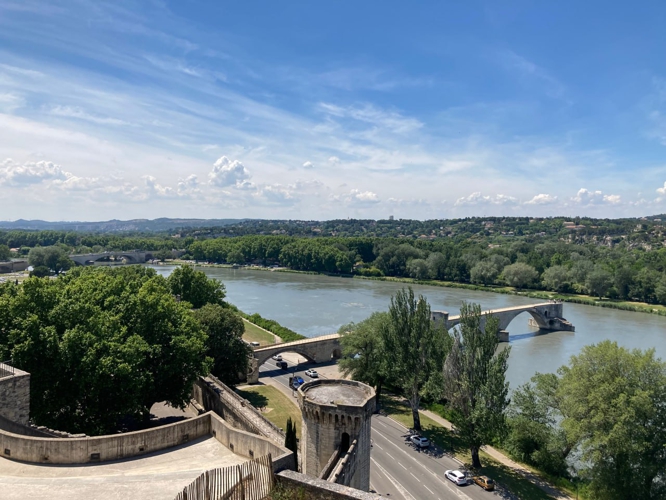
Further along, riders pass through Orange with its famous Roman theatre, then reach Avignon, home to the iconic Palais des Papes and medieval bridge. Near the end of the journey, Arles introduces a distinctly Provençal atmosphere, with Roman ruins, sunlit stone architecture, and easy access to the Camargue region.
 © Easy Trek
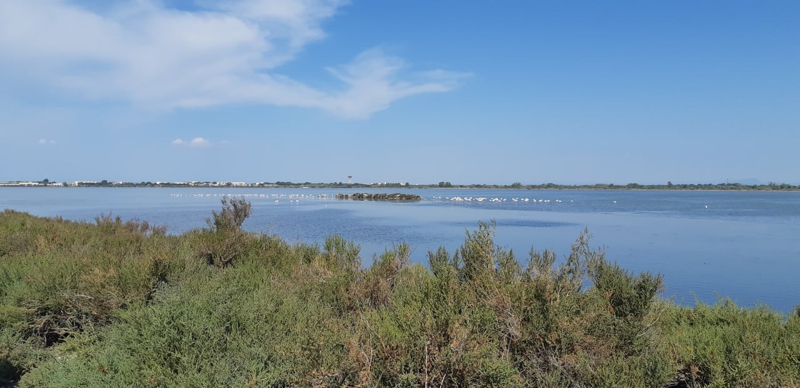
By this stage, the scenery has transformed entirely. Vineyards and orchards give way to open plains, lavender fields, olive groves, and eventually the wetlands of southern France. Flamingos, salt marshes, reed beds, and wide open skies signal the approach to the Mediterranean, making the ViaRhôna feel like multiple journeys in one.
 © Easy Trek
Two Mediterranean Endings: Sète or Port-Saint-Louis-du-Rhône
One of the unique features of the ViaRhôna is its two possible Mediterranean endings.
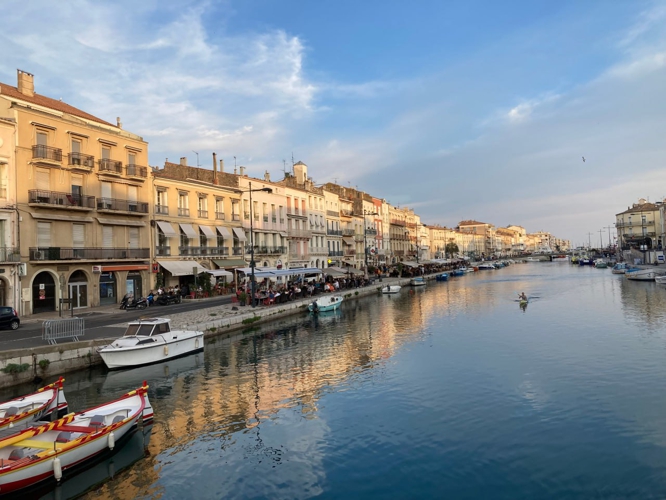
The first option leads to Sète, a lively canal city on the Mediterranean coast known for its beaches, seafood culture, and colorful port atmosphere. Arriving here offers a classic seaside finale, where cyclists can celebrate their journey with a swim or dinner overlooking the sea.
 © Easy Trek
The second option ends at Port-Saint-Louis-du-Rhône, located within the Camargue delta. This finish offers a wilder atmosphere, with wetlands, salt marshes, flamingos, and vast open landscapes creating a very different Mediterranean arrival experience.
Both endings provide memorable conclusions to the journey, allowing cyclists to choose the atmosphere they prefer.
Why Cycle the ViaRhôna?
The ViaRhôna is an excellent introduction to long-distance cycling. The route is accessible, well organized, and offers a rich variety of scenery, cuisine, and cultural experiences. From lakeside views and vineyards to Roman cities and Mediterranean landscapes, few cycling routes offer such diversity in a single itinerary.
Because the route can be split into shorter stages and easily accessed by train, it is suitable for both shorter holidays and full end-to-end adventures.
With Easy Trek, you can plan the ViaRhôna exactly as you want. Choose your own start and end points, shorten or extend the route, select accommodations, and access all Easy Trek features fully adapted to bike tours.
This is only the beginning of cycling on Easy Trek, with many more bike tours coming soon!
Arnaud Delamare
Lead developer at Easy Trek, I combine my passion for technology with my love of nature. A fan of hikes in the Jura and Valais, I never miss a chance to enjoy a sunset from the top of a trail. Between coding and breathtaking views, I turn every idea into an experience on our routes.